Trenton officials announced $1.5 million in state funding to reduce extreme heat in vulnerable neighborhoods.
The funding, awarded through the New Jersey Board of Public Utilities’ Urban Heat Island Mitigation Program, will support tree planting and the creation of a resilience hub, with additional funding going to local community groups.
The City said in a news release that its Department of Recreation, Natural Resources & Culture received the $1.5 million grant as part of a $5 million statewide initiative aimed at addressing urban heat island effects.
Local community organizations were also awarded an additional $200,000 to support smaller-scale cooling and greening efforts.
Officials said the combined investments are intended to expand cooling infrastructure, reduce energy demand and improve public health outcomes, particularly in neighborhoods most affected by extreme heat.
Mayor W. Reed Gusciora said the funding addresses a growing concern.
“Extreme heat is an urgent public health and energy issue that disproportionately impacts our residents. This vital funding from the NJBPU empowers us to build a more sustainable, resilient, and equitable Trenton,” Gusciora said.
The largest portion of the funding — $1 million — will go toward the Trenton North and West Wards Tree Arteries Project.
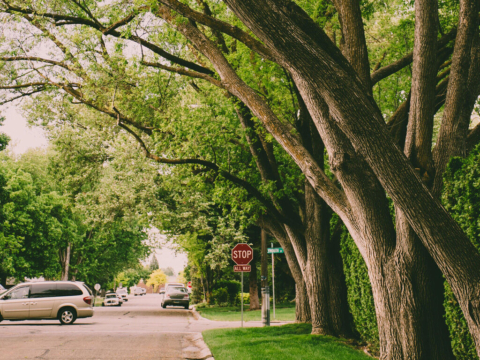
The City said the project will result in the planting of approximately 700 trees along key street corridors, providing shade and improving air quality while helping connect residents to cooling centers, schools, medical facilities and public housing.
Another $500,000 will be used to convert the former Hermitage Library into a resilience hub.
City officials said the facility will provide cooling during extreme heat events, emergency resources for residents and additional space for programming and storage associated with the Ellarslie Museum.
Paul Harris, interim director of the Department of Recreation, Natural Resources & Culture, said the projects are designed to directly reduce neighborhood temperatures.
“By drastically expanding our tree canopy and opening a new resilience hub, we are directly lowering neighborhood temperatures, reducing energy burdens, and protecting our most vulnerable families during the hottest days of the year,” Harris said.
Urban heat islands occur in densely developed areas with limited green space and can be significantly warmer than surrounding areas.
The City said higher temperatures can worsen air quality and increase the risk of health conditions such as asthma and cardiovascular disease.
Trenton’s proposal was selected through a competitive process that considered factors such as municipal distress, energy burden and heat vulnerability.
City officials said the projects are expected to be completed over the next two to three years, with technical support provided by the Center for Urban Policy Research at Rutgers University.