BY DEVON WILLIAMS
NJ State House News Service
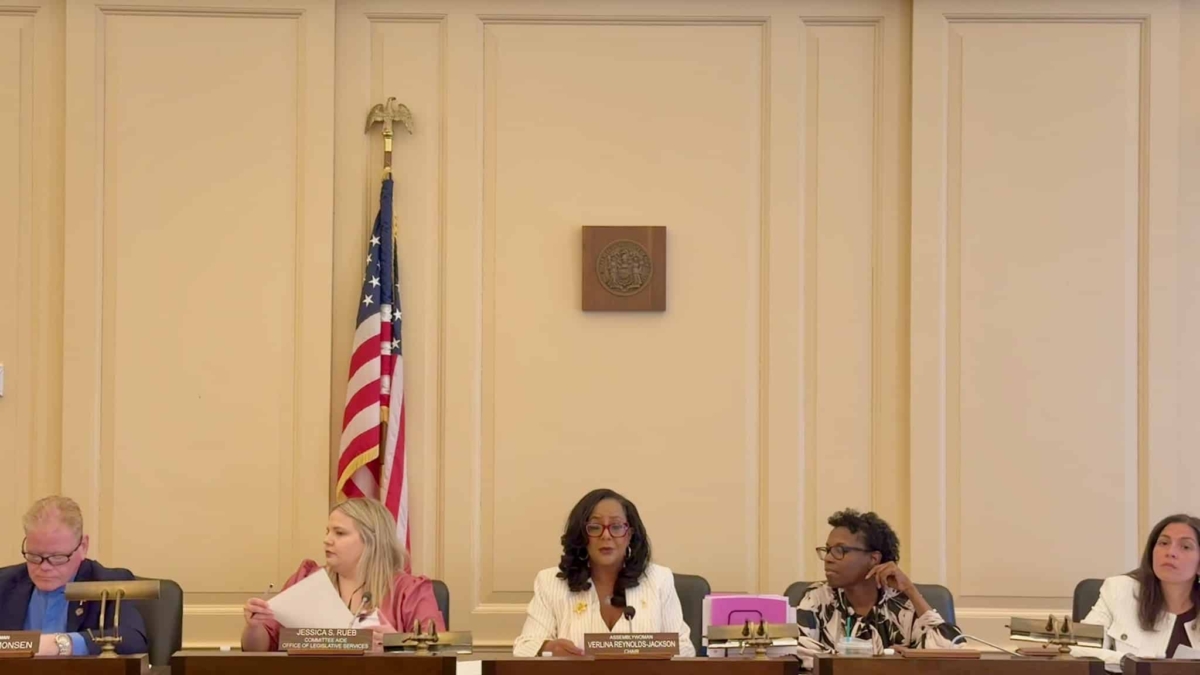
A bill that would increase transparency on public school funding and provide earlier minimum-aid notices unanimously passed the Assembly Education Committee on June 15.
The bill, A3881, would change districts’ calculated local contribution to school costs by using multi-year averages instead of single-year averages of property values and district income. This would make state aid calculations more stable and easier for districts to predict, so districts can better craft budgets and make administrative decisions further in advance.
Elizabeth Ginsburg from the Garden State Coalition of Schools testified, “I am also a 26-year school board member. I have been through the budgeting process 26 times, and the same ambiguity has been present 26 times.” She said she believes the measure “brings clarity to aspects of the budgeting process, and that is important.”
The bill also creates a New Jersey Education Funding Portal where districts and parents could see the data and calculations used to determine state aid.
The portal would allow users to adjust factors such as enrollment, property values and income to estimate how changes could affect a district’s aid, making funding decisions more clear and accessible to residents.
This bill comes as part of Gov. Mikie Sherrill’s campaign for increased transparency within school funding and reallocation of funds to historically underserved districts such as Paterson, Newark and Trenton – all of which received the maximum 6% increase in aid.
This year, Sherrill’s proposed budget includes $12.4 billion in K-12 school aid, which the administration has described as the largest amount in state history and a $370 million increase from the previous year. But the proposal also keeps limits on how quickly districts can gain or lose aid, as increases are generally capped at 6%, while reductions are capped at 3%.
The School Funding Reform Act of 2008 formula relies on factors such as enrollment, local property wealth, district income and student needs such as poverty, English-language learning and special education for aid calculations.
The 2018 Law S-2 phased out “adjustment aid” for districts receiving more state funding than the formula said they should receive and redirected aid towards underfunded districts.
This bill, in contrast, would require the education commissioner to send school districts a preliminary state aid notice by the end of the first week in December, months before districts typically receive final aid figures after the governor’s budget address.
Several education groups that testified before the committee supported the bill’s goals of transparency and earlier notice, but raised concerns about timing and implementation. Some witnesses said districts already operate under mismatched state, school and municipal budget calendars, and warned that the ability to revise budgets later in the year may not help districts that must make staffing decisions months earlier.
“We give our layoff notices in early May. So by the time that this provision would be activated, the employee you might want to keep would already be gone,” said Ginsberg.
The measure passed unanimously with amendments, 6-0. Assembly Member Dawn Fantasia, a Republican from Franklin Borough (Sussex), was not present.