
Monmouth County has taken a major step toward preserving a historic stretch of farmland near Allentown as the nation prepares to mark the 250th anniversary of American independence.
The Monmouth County Board of County Commissioners voted 4-1 after a public hearing May 14 to approve a bond ordinance funding the acquisition of the Stein property, a 115-acre tract in Upper Freehold and Robbinsville that had been proposed for two large warehouses.
The vote marked one of the final public steps toward the county’s purchase of the Stein property, but the acquisition will not be complete until the county officially closes on the deal.
The tract has drawn attention not only because of the warehouse proposal, but also because of its ties to the Revolutionary War. Local preservation supporters have said British troops encamped on or near the land in 1778 before the Battle of Monmouth, one of the largest battles of the war.
The timing has added significance as the United States prepares for events connected to the nation’s semiquincentennial this July 4.
The ordinance appropriates $27.75 million for the stated purpose of the acquisition of property for recreation, conservation and farmland preservation purposes. It also authorizes the issuance of $22.75 million in bonds to help finance the purchase.
The ordinance includes a $5 million down payment from the county’s Open Space, Recreation, Farmland and Historic Preservation Trust Fund.
The Stein property is located along Old York Road in Upper Freehold and Allentown Road in Robbinsville. The land had been targeted for warehouse development totaling about 453,720 square feet.
The project would have placed large-scale industrial buildings near residential neighborhoods in Allentown and along a corridor that residents and local officials have described as historically and environmentally sensitive.
The warehouse plan drew opposition from residents, Allentown officials, preservation advocates and some state officials. Opponents raised concerns about truck traffic, air pollution, noise, safety and the effect of industrial development near homes and historic properties.
The property was purchased in 2022 by Wall-based developer Active Acquisitions for $15 million. The proposed warehouse project later became the focus of public meetings, protests, petitions and legal action.
Allentown sued the Upper Freehold Planning Board and AAESUF Property — an LLC associated with Active Acquisitions — after the planning board approved the warehouse project in December 2024. The lawsuit was part of a broader local effort to prevent the project from moving forward.
The county commissioners first voted March 12 to move forward with the purchase. The board introduced the bond ordinance in April and held the public hearing before the final vote May 14.
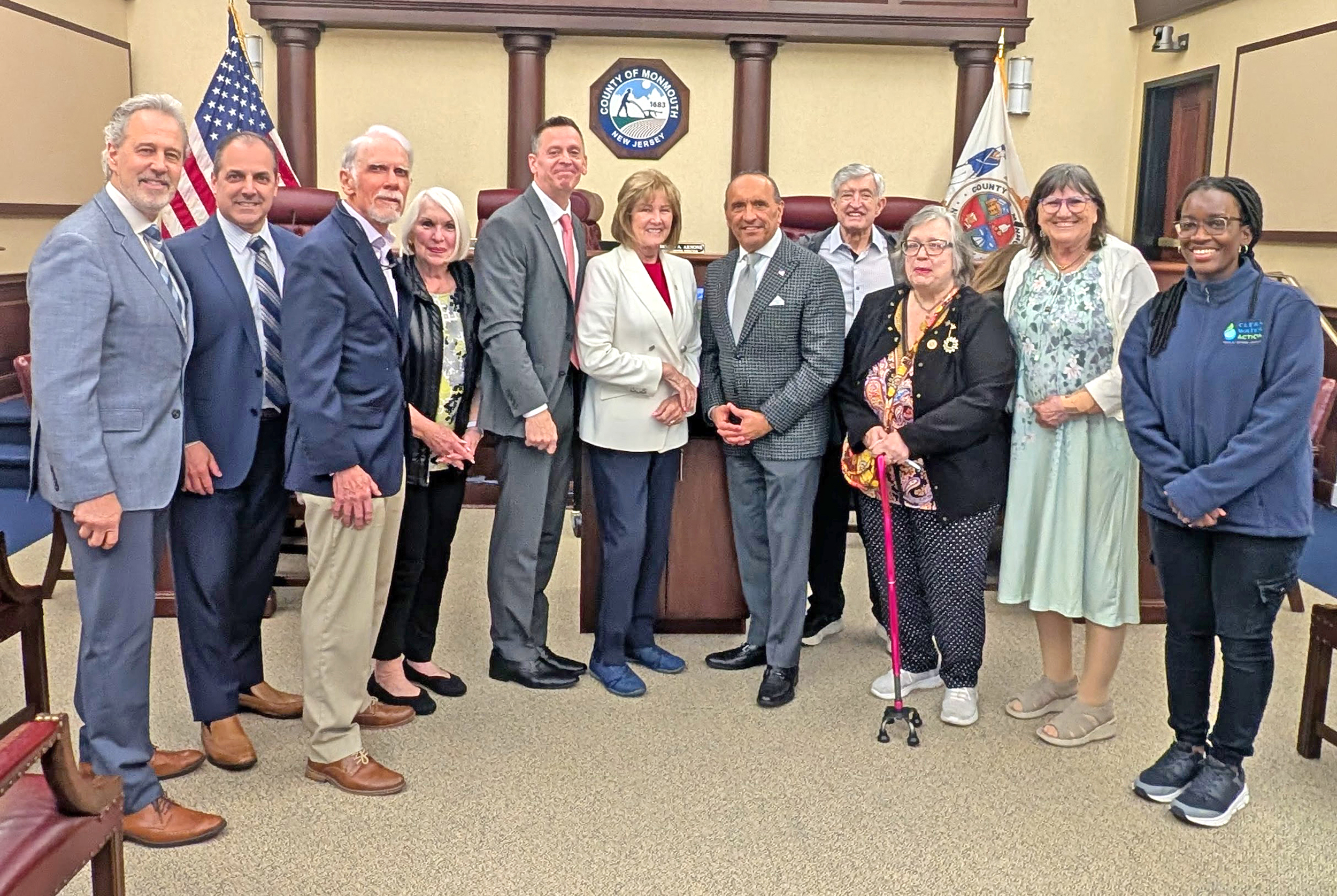
Commissioner Director Thomas Arnone, Commissioner Deputy Director Dominick DiRocco, Commissioner Susan Kiley and Commissioner Ross Licitra voted in favor of the ordinance. Commissioner Erik Anderson voted against it.
Supporters have described the acquisition as a major preservation victory for Allentown, Upper Freehold, Robbinsville and the surrounding region.
The property could eventually become part of the Monmouth County park system. One possibility discussed publicly has been an extension of Crosswicks Creek Park, though no final park plan has been adopted.
Supporters have also discussed potential uses tied to the property’s history and rural character, including historical trails, agricultural programming or other passive recreation uses.
The Revolutionary War connection has become a central part of the preservation argument.
In June 1778, British forces moved across New Jersey after leaving Philadelphia. The movement led to the Battle of Monmouth, fought June 28, 1778, in what is now Freehold and Manalapan. The battle became a defining moment in the war and remains one of Monmouth County’s most important historic events.
Preservation advocates have said the Stein property is part of that broader Revolutionary War landscape. They have argued that protecting the land would preserve not only open space, but also a physical connection to the events surrounding the Battle of Monmouth.
That historical connection is expected to take on greater visibility as communities prepare to commemorate the 250th anniversary of the signing of the Declaration of Independence.
For Allentown residents, the issue was also deeply local.
The proposed warehouses would have been built just outside the borough, but close enough that residents said Allentown would have felt the effects from truck traffic and related impacts. Opponents said the project would have changed the character of the area and placed industrial development too close to homes.
Public opposition included a Change.org petition with more than 4,000 signatures. Residents also attended planning board meetings, contacted public officials and participated in protests along Old York Road.
Allentown Mayor Thomas Fritts was among the officials who supported the preservation effort.
Following the passage of the bond measure, Fritts said: “Twenty-seven and a half million dollars is an incredible investment, but losing the soul of our community to massive warehouse development would have cost us far more.”
He added that residents, business owners and nonprofits in Allentown and Upper Freehold spent more than two years opposing a project they believed would harm the area’s historic landscape, traffic safety and quality of life.
He said the county’s 4-1 bond vote was about more than buying land. It was about permanently protecting the community.
“To those who said saving this property was an impossible pipe dream: our community just proved that preserving our shared heritage and environment is worth every single penny,” Fritts said.
The preservation effort was not universally supported.
Upper Freehold officials objected to the county purchase, saying the warehouse development would have generated significant tax revenue for the township and the Upper Freehold Regional School District.
Mayor Stanley Moslowski Jr. and the Township Committee argued that the county purchase removed land from the local tax rolls and interfered with the township’s control over land that had been zoned for warehouse use.
A township resolution opposing the purchase said the warehouse project could have generated about $13 million in local taxes over 10 years, including more than $9.5 million for the school district.
The resolution also said the tax revenue would have helped ease the burden on Upper Freehold taxpayers.
Township officials questioned the $27.75 million acquisition price, noting that the developer had purchased the property for $15 million in 2022. They also said the property represented one of the few remaining sites in Upper Freehold that could accommodate that type of development.
Supporters of the county acquisition have countered that the long-term value of preserving farmland, open space, history and quality of life outweighs the potential tax revenue from warehouses.
They have also argued that the property’s location near Allentown, its proximity to residential neighborhoods and its historic significance made it unsuitable for large-scale industrial development.
The vote does not immediately create a park or determine the final use of the land. County officials still must complete the acquisition process and determine how the property will be used and managed.
But for preservation supporters, the May 14 vote represented the clearest sign yet that the warehouse project will be replaced by a public preservation effort.
The acquisition would also add to a larger preservation story in western Monmouth County, where open space, farmland, historic roads and Revolutionary War sites are central to the region’s identity.
For Allentown, the county action could help preserve the rural edge of the borough at a time when warehouse development has been a recurring issue throughout central New Jersey.
For Monmouth County, the purchase could turn a controversial industrial development site into public land with environmental, agricultural and historical value.
