Once, when I was taking a morning stroll through the fairytale mountains of Colorado, I suddenly bumped into a predator with glaring eyes and frighteningly large fangs. Luckily for me, it was only a poster. “Warning: Mountain Lion” stated the black letters on the yellow sign, followed by a series of stern instructions: Do not run. Do not look him in the eyes. Spread your arms so that you look bigger. Keep your children close to you.
That’s a big change from the warning signs in the Dutch village where I grew up telling drivers to watch out for honey badgers crossing the road. At first, I thought I just had a colorful story to tell at home about the warning sign. Until a few days later I read a report in the newspaper that a mother in a nearby town had pulled her toddler out of the mouth of a cougar. The article featured a photograph of the dead animal, which had been promptly shot.
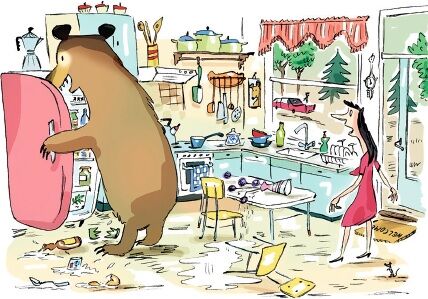
That night, in our rented apartment, we all woke up startled by a deafening clamor outside. Outside, a family of bears was violently rattling the garbage crates, which had been anchored to the ground with thick iron padlocks. Always close the doors, even when you’re at home, our landlord warned us. These bears will unceremoniously invite themselves into the kitchen, open the fridge, and eat everything.
But just as we were ready to drop off our apartment key, I found myself standing face-to-face with a bear in my kitchen. Don’t look at him, I told myself, and don’t run away. I remember praying that my family, waiting patiently in the car, would be curious why I had not returned. But, thankfully, the bear ambled away.
Nature in America is, like food portions and the waist circumference of citizens, a size bigger than in the Netherlands. In Europe we imagine ourselves to be basically secure, and nature is largely under control. Here, even in bucolic Princeton, there are regular reports of bears in Herrontown Woods and coyotes roaming the Institute Woods.
Wilderness is alive and well here. You can see the difference even in the ways Europeans and Americans deal with the green spaces around their houses. Americans see their lawns as barriers between them and the raw wilderness, a moat made of grass. Their back yards are like a piece of forest, an idealized image of the wild and unfathomable nature that lies just beyond.
For the Dutch, on the other hand, the outdoor “garden” (never a “lawn”) is an extension of their home, part of the civilized world that has moved outside. Raked, with flowers and plants to make it cozy. Inhabited by gnomes and crammed with windmills and fences, it is a place where no one can imagine a bear waddling down the garden path. Buried in the American psyche is still the spirit of the first settlers who set foot in a continent inhabited by unknowable wild beasts.
The wilderness is always closer than you think. My neighbor who visits Montana woke up the other day to find a bear going through his garbage can.
The next day he had an unexpected visit from two bearded game wardens, both of whom themselves looked like bears. “You need a bear-proof garbage can,” they said, and handed him a written warning for failing to store food properly.
The famous verse of Alfred Lord Tennyson keeps running through my head. It is about humans:
Who trusted God was love indeed
And love Creation’s final law
Tho’ Nature, red in tooth and claw
With ravine, shriek’d against his creed.